Vinok: The Traditional Ukrainian Flower Crown
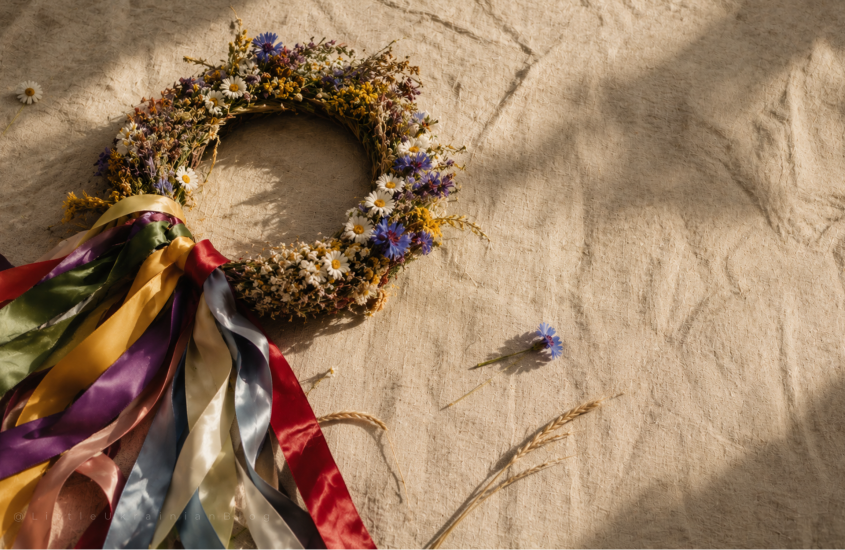
If you’ve ever seen photos of Ukrainian traditional dress, you’ve probably noticed the colourful flower crown worn by many women and girls. Known as a vinok (Вінок), it is one of the most recognisable symbols of Ukrainian culture . The vinok (Вінок), the iconic Ukrainian flower crown, is more than just a beautiful accessory; it is a symbol of heritage, purity, and strength, passed down through generations.
For centuries, Ukrainians have woven flower crowns for celebrations, festivals, weddings and seasonal rituals. Different flowers carried different meanings, ribbons were carefully chosen, and the wreath itself became a symbol of youth, beauty and connection to nature. Today, the vinok remains an important part of Ukrainian cultural identity both in Ukraine and throughout the diaspora.

Contents
- What is a Vinok? | Що таке вінок?
- The History of the Ukrainian Vinok | Історія українського вінка
- Symbolism | Символізм
- How the Vinok was Traditionally Made | Як плели вінки
- The Vinok in Ukrainian Festivals and Traditions | Вінок в українських обрядах і традиціях
- The Vinok Today | Вінок у сучасній Україні
- A Living Symbol of Ukrainian Culture | Живий символ української культурної спадщини
- Frequently Asked Questions | Поширені запитання
1. What is a Vinok?
Що таке вінок?
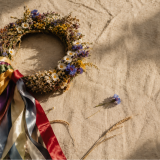
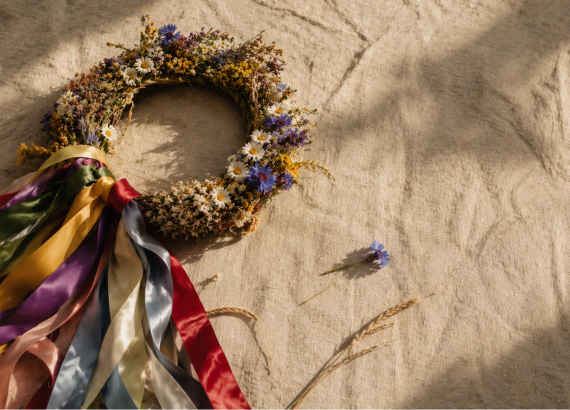
A vinok is a traditional Ukrainian flower crown made from fresh or dried flowers and decorated with long colourful ribbons.
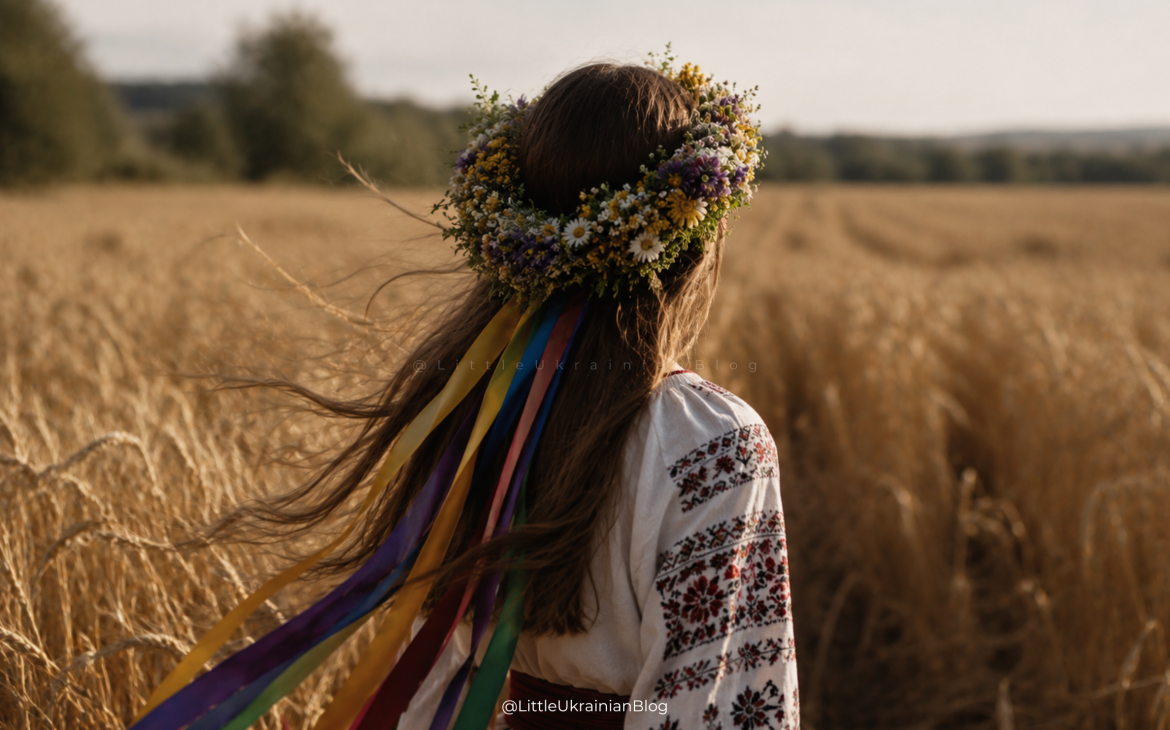
Historically, vinoks were most commonly worn by unmarried girls and young women. In many regions of Ukraine, wearing a vinok signified youth and maidenhood, while married women covered their hair with other forms of traditional headwear. Although flower crowns exist in many cultures, the Ukrainian vinok developed its own distinctive traditions, symbolism and regional styles.
2. The History of the Ukrainian Vinok
Історія українського вінка
The tradition of wearing flower crowns dates back centuries in Ukraine. Historically, the vinok was closely tied to both pagan and Christian practices. In ancient times, it was believed that the vinok had protective qualities, guarding the wearer from evil spirits. With the spread of Christianity in Ukraine, the vinok became a common accessory during religious holidays and festivals.
By the nineteenth century, the vinok had become a familiar feature of traditional Ukrainian dress. Regional variations emerged across the country, with different flowers, colours and weaving techniques reflecting local customs.
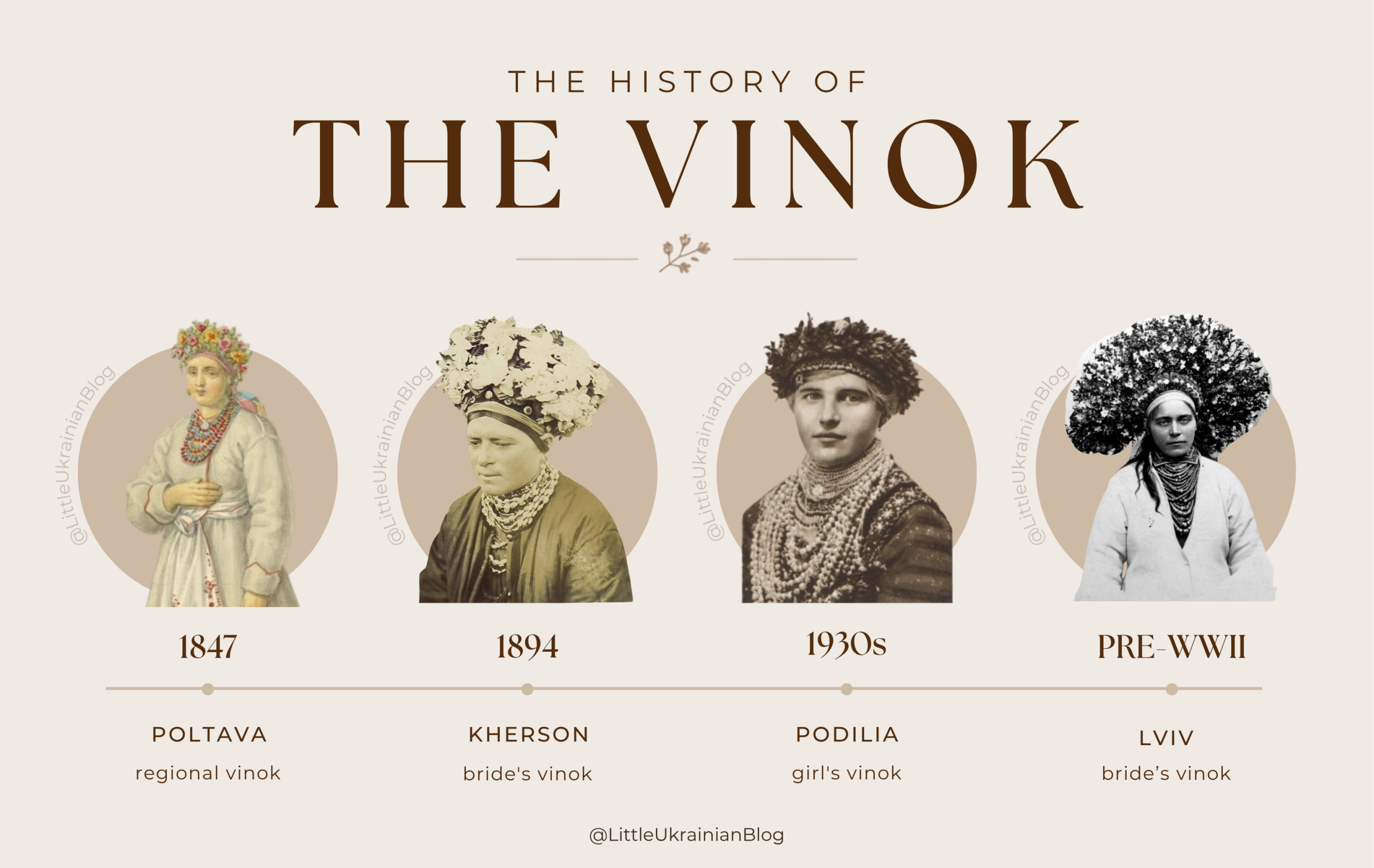
The vinok remained visible throughout the Soviet period, but its role in Ukrainian culture changed significantly. While traditional flower crowns continued to appear in folk costumes, dance ensembles and state-sponsored cultural events, many of their original regional variations and ritual meanings were lost or simplified. Standardised designs featuring bright artificial flowers and long colourful ribbons became common, particularly for stage performances.
Following Ukraine’s independence in 1991, interest in authentic folk traditions grew, leading to a renewed appreciation of regional vinok styles and their historical significance. In the decades that followed, the vinok re-emerged not only as a symbol of Ukrainian heritage, but also as an expression of national identity and cultural pride.
3. Symbolism
Символізм
In Ukraine, the vinok carried deep solar symbolism, with a girl wearing one often compared to the rising sun. It represented not only warmth and light but also glory, victory, holiness, happiness, success, strength, peace, and purity. As a symbol of youth and maidenhood, different types of vinoks were created for various life events. There were wreaths for weddings, love, hope, religion, devotion, and even separation. From the age of 13 until marriage, a girl had the right to weave a love wreath. A devotion wreath, on the other hand, was crafted when saying farewell to a beloved and given as a parting gift. Each flower and ribbon used in its creation carries its own significance.
It’s important to remember that traditions and rituals surrounding the selection of flowers and ribbons for a vinok varied not only by region but also from family to family.
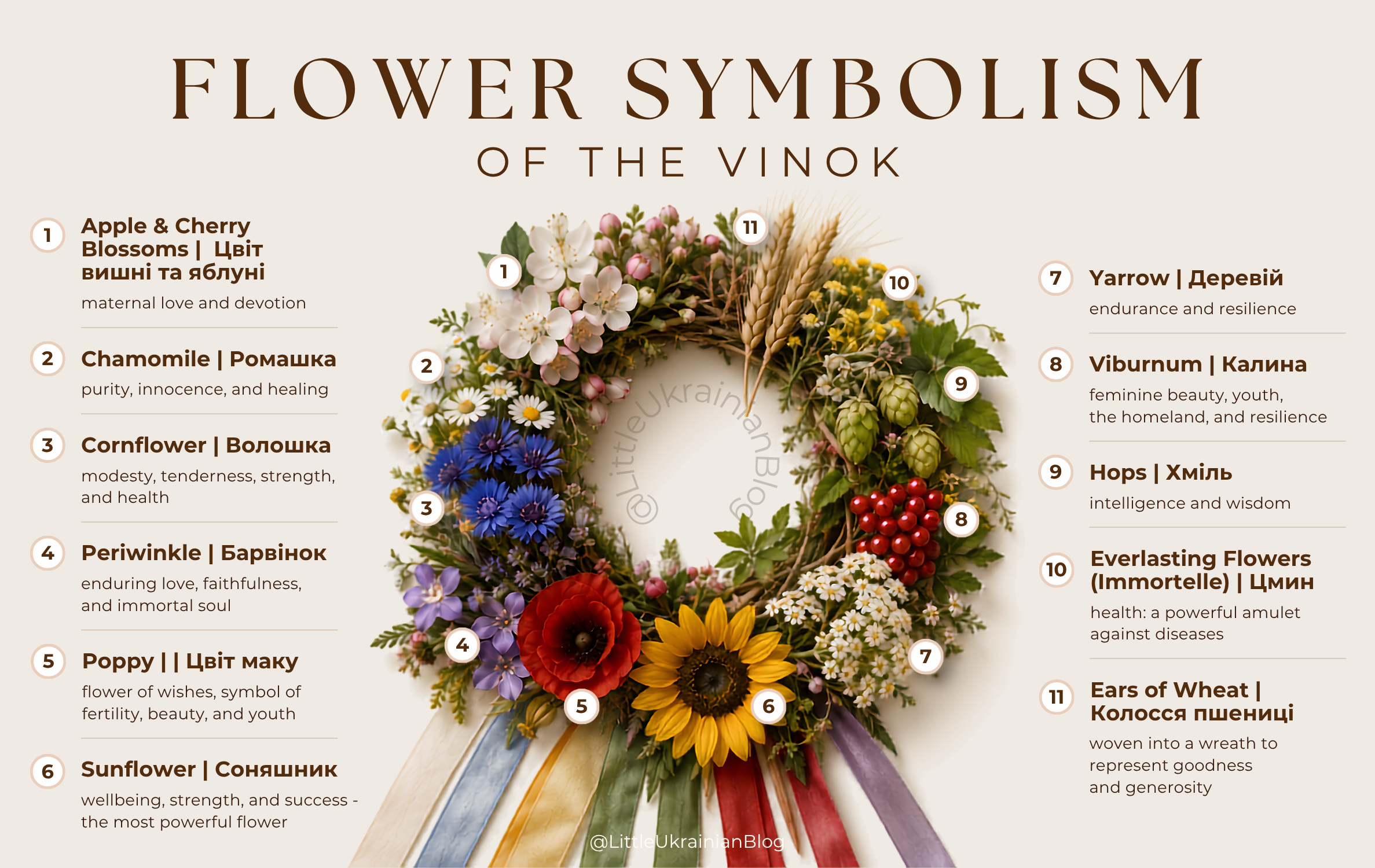
The symbolism of flowers in a vinok:
One of the reasons the vinok remains so fascinating is the symbolism attached to its flowers. While traditions varied from region to region and even between families, certain flowers appeared regularly in Ukrainian folklore. It’s important to remember that there was never a single “official” vinok. The exact flowers used depended on the season, local traditions and what was available in the surrounding countryside.
Apple and cherry blossoms represent maternal love and devotion.
Chamomile personifies a girl’s purity, virginity, and loyalty. This flower brings health, kindness and tenderness.
Blue cornflowers were woven into a vinok as a symbol of modesty, tenderness, strength and health. It is common to see cornflowers woven side by side with lovage on a traditional vinok.
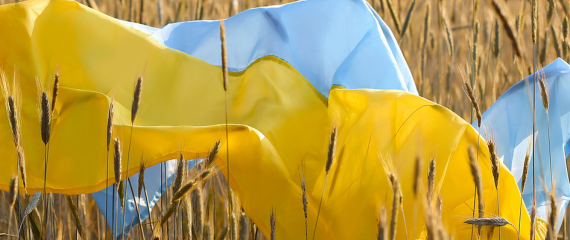
Ears of wheat were sometimes woven into a wreath to represent goodness and generosity.
Everlasting flowers were believed to symbolise health. This plant was considered to be a powerful amulet against diseases.
Hops embodies intelligence and wisdom.
Periwinkle is one of the most important plants in Ukrainian folk culture. Because it remains green throughout the year, it came to symbolise enduring love, faithfulness and continuity. Periwinkle also symbolises immortal soul and life.
Poppies are the flowers of wishes, and the symbol of fertility, beauty, and youth.
Sunflowers represent wellbeing, ambition, strength, and success. It was believed that the sunflower is the strongest and most powerful amongst flowers.
No plant is more strongly connected to Ukrainian identity than the red viburnum. Also known as kalyna, this is one of the strongest symbols of Ukraine. This plant is believed to represent feminine beauty, youth, the homeland, and resilience. It is also often found embroidered on women’s clothing.
Yarrow is one of the most significant flowers in a vinok. Its tiny white blossoms cluster together, giving the appearance of a larger flower from afar. Symbolising endurance and resilience, yarrow continues to thrive even as it fades as its seeds carried by the wind to take root and bloom once more.
It is said that a complete Ukrainian vinok was to contain 12 flowers: Apple and cherry blossom, cornflower, chamomile, rosehip, malva, peony, lovage (любисток), mallow, yarrow, everlasting flowers (immortelle), and periwinkle.
The symbolism of ribbons in a vinok:
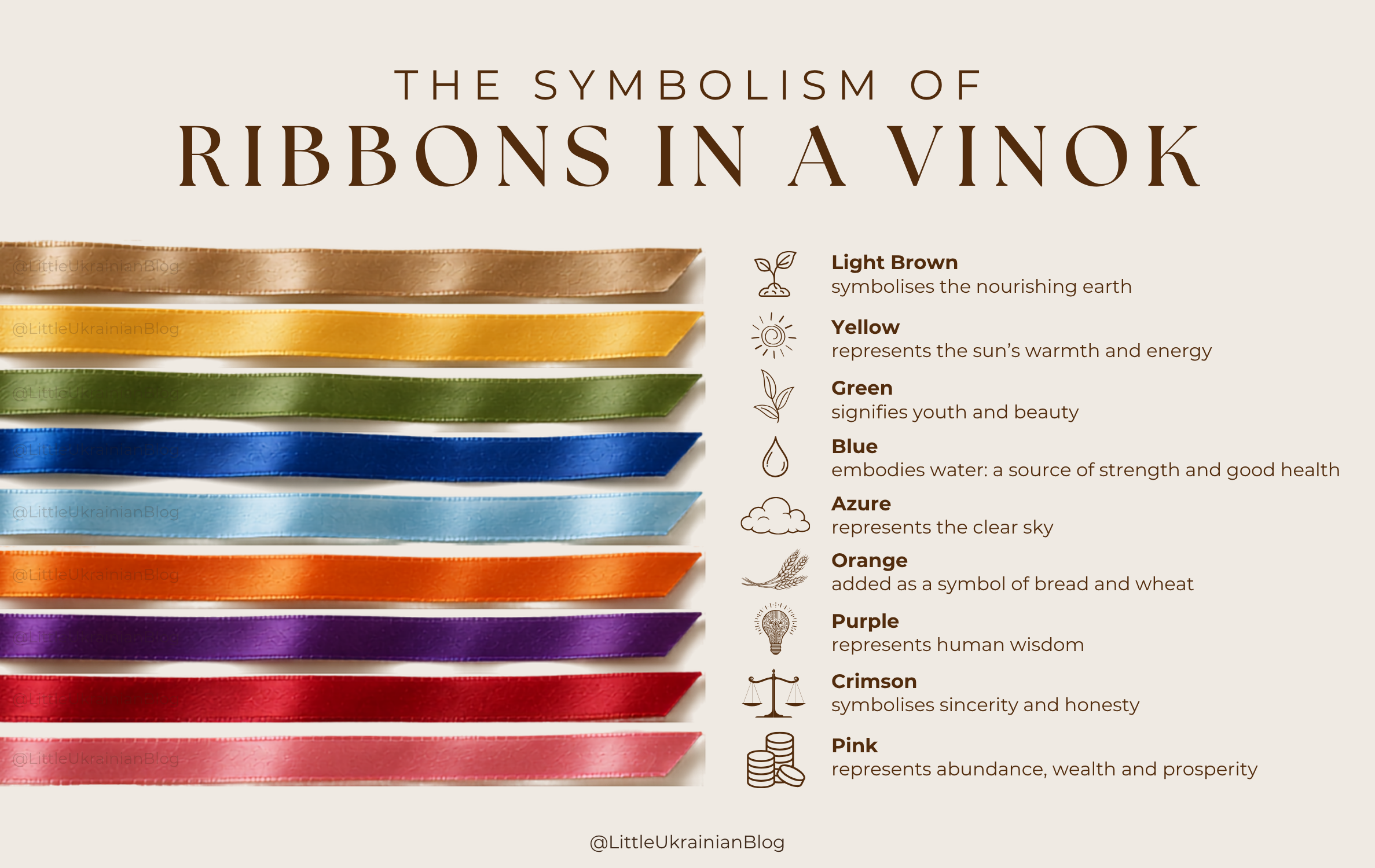
In addition to flowers, a traditional Ukrainian vinok is also decorated with colourful satin ribbons. Ukrainians believed these ribbons held protective powers, protecting the wearer from evil. The length of each ribbon is not fixed, as it is measured to match the girl’s braid, extending just beyond its tip to fully cover the hair. Each ribbon colour carries its own unique meaning.
The first ribbon woven into a Ukrainian vinok is light brown, symbolising the nourishing earth. On either side of it, yellow ribbons represent the sun’s warmth and energy. Next comes green, signifying youth and beauty, followed by blue and azure, which embody water and the clear sky – sources of strength and good health. After the blue ribbons, orange is added as a symbol of bread, while purple represents human wisdom. Crimson ribbons are essential, symbolising sincerity and honesty, while pink ribbons complete the wreath, representing abundance, wealth and prosperity.
According to folk traditions, orphaned girls wove blue ribbons into their braids, making their status known to others. Upon meeting them, people would offer bread, clothing, fabrics, money, and other gifts as acts of kindness. They also wished these girls happiness and prosperity.
4. How the Vinok was Traditionally Made
Як плели вінки
Creating a vinok was a careful and meaningful process. Flowers were gathered fresh from meadows or gardens, chosen based on their symbolic meanings. Each bloom was delicately woven into a circular frame made of flexible willow branches or woven grasses.
In some regions, dried flowers were incorporated to ensure the crown lasted longer. The final touch was the addition of long, colourful ribbons that cascaded down the wearer’s back, further emphasizing the symbolic messages woven throughout the design.
5. The Vinok in Ukrainian Festivals and Traditions
Вінок в українських обрядах і традиціях
Vinoks played an important role in many traditional celebrations.
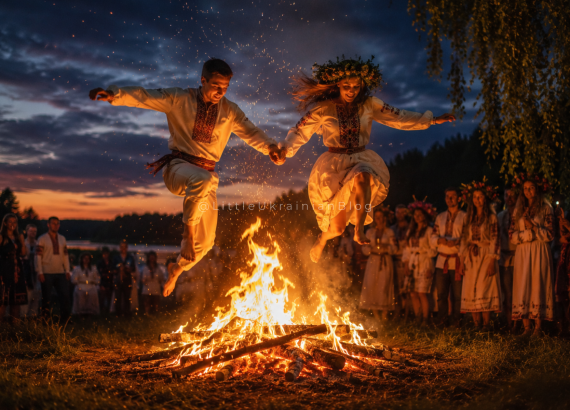
Perhaps the most famous is Ivana Kupala Night, a midsummer festival celebrated in July. During the festivities, young women would weave flower crowns and float them on rivers. According to folklore, the way the wreath drifted could reveal clues about future love and marriage.
Vinoks also appeared in wedding customs, harvest celebrations and village festivals throughout Ukraine.
6. The Vinok Today
Вінок у сучасній Україні
Since the 2014 Euromaidan uprisings, the wearing of a vinok increased in popularity as part of a wider revival in Ukrainian culturalism and interest in symbols of national pride. In addition to aesthetic purposes, wearing a vinok was also a symbol of protest used in demonstrations beginning in the 2004 Orange Revolution and continuing in the 2014 revolution, as well as post-2022 demonstrations against the russian invasion of Ukraine.
Today, the vinok has experienced a revival, emerging as a powerful symbol of Ukrainian cultural pride and identity. It is frequently worn at festivals, weddings, and during national holidays. The vinok has also found its place in modern fashion and art, with designers incorporating its vibrant aesthetics into contemporary styles.
In recent years, the vinok has become a global symbol of Ukraine’s resilience and cultural richness. Ukrainian women often wear vinoks in public demonstrations and international events, proudly showcasing their heritage. This renewed interest in the vinok reflects a deep connection to Ukraine’s past, while celebrating its vibrant future.
7. A Living Symbol of Ukrainian Culture
Живий символ української культурної спадщини
The vinok has survived centuries of change because it represents something deeper than fashion or folklore. It tells a story of identity, tradition and belonging. From the wildflowers woven into its crown to the ribbons flowing behind it, every vinok carries echoes of the generations that came before.
Today, it remains one of the most recognisable symbols of Ukrainian culture, a reminder that traditions are not just preserved in museums, but kept alive by the people who continue to celebrate them.
7. Frequently Asked Questions
Поширені запитання
A Ukrainian flower crown is known as a vinok (вінок), a traditional wreath made from flowers, herbs and ribbons. Historically worn by young women and girls, the vinok is an important symbol of Ukrainian culture, heritage and folk traditions.
A vinok (вінок) is a traditional Ukrainian flower crown made from flowers, herbs and colourful ribbons. It has been worn in Ukraine for centuries and is one of the most recognisable symbols of Ukrainian culture.
Traditionally, the vinok symbolised youth, beauty, purity and a connection to nature. Different flowers and ribbon colours could carry their own meanings, although these varied by region and family tradition.
There is no single set of flowers used in every vinok. Common flowers include chamomile, cornflowers, poppies, periwinkle, and viburnum. The exact flowers depended on local traditions, the season and what was available in the surrounding area.
Historically, vinoks were most often worn by unmarried girls and young women. In many parts of Ukraine, a vinok was associated with maidenhood, while married women wore different forms of traditional head coverings.
A vinok is a traditional Ukrainian flower crown, while a kokoshnik is a traditional russian headdress. They have different origins, designs and cultural meanings. The vinok is a distinct symbol of Ukrainian heritage and identity.